Venezuela Earthquake 2026: Travel Advisory and Safety Guide
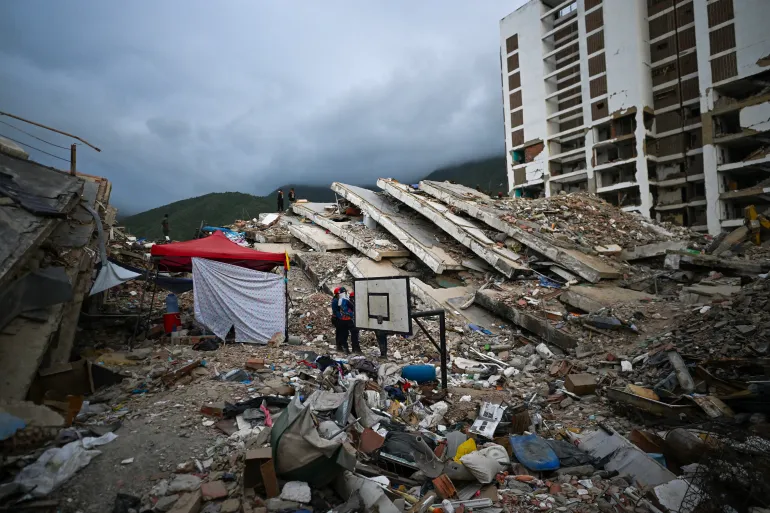
At 6:04 in the evening local time on June 24, 2026, the ground beneath northwestern Venezuela began to shake. The first quake - a Mw 7.2 temblor originating near San Felipe, Yaracuy - lasted only seconds before a second, stronger shock followed just 39 seconds later. The Mw 7.5 mainshock tore along the San Sebastian fault system for roughly 90 to 120 seconds, toppling buildings across the Greater Caracas area and the coastal state of La Guaira, sending shockwaves felt as far away as Trinidad and Colombia, and triggering a brief tsunami advisory across parts of the Caribbean.
Five days on, the death toll has passed 1,450, with more than 3,150 people injured and over 46,000 still missing. Venezuelan authorities warn those figures will rise. If you have a trip to Venezuela planned - or you’re currently there - here is everything you need to know right now about Venezuela earthquake travel safety and your options.
What Happened on June 24
The two earthquakes struck in quick succession, with both epicenters in San Felipe, Yaracuy, roughly 150 kilometres west of Caracas. Seismologists classify them as a doublet earthquake - two large events on the same fault system occurring almost simultaneously - which is why damage was so widespread.
The hardest-hit areas are La Guaira and Caracas. La Guaira, Venezuela’s main port city and the coastal hub through which most international air and sea arrivals pass, suffered devastating losses. Buildings along the seafront collapsed, the port - Venezuela’s second-largest - sustained significant structural damage, and the highway linking La Guaira to the capital was badly disrupted in multiple sections.
Damage also spread through the states of Aragua and Carabobo, as well as into parts of Caracas itself. The United States Geological Survey’s PAGER system issued its most serious alert level and warned the eventual death toll could significantly exceed current figures. These are the strongest earthquakes to hit Venezuela since the 1900 San Narciso event.
More than 130 aftershocks have been recorded since June 24. Seismologists warn that significant aftershock activity will continue for weeks.
How This Affects Travelers: Airports, Flights, and Ports
Simon Bolivar International Airport (CCS)
Caracas’s main international airport is closed to all commercial traffic. The terminal building sustained structural damage, including a partial roof collapse, and the runway was assessed as unsafe for normal operations. As of June 29, the airport remains in emergency-only mode - operating limited military, government, and humanitarian aid flights only.
CCS is not expected to reopen to commercial flights before July 2 at the earliest, and that timeline may slip depending on ongoing engineering assessments. If you are holding a ticket to or from Caracas, do not go to the airport unless your airline has explicitly confirmed your flight is operating. Arriving at a closed international airport with no viable exit is not a situation you want to be in.
Flight Rerouting and Alternative Airports
Several airlines with routes to Venezuela have begun operating limited services via Valencia’s Arturo Michelena International Airport (VLN), roughly 170 kilometres from Caracas, as an interim hub. The road between Valencia and Caracas is functioning but slow. Check directly with your carrier for the most current routing information.
Airlines with affected routes include those operating from Miami, Bogota, Madrid, Lisbon, and Panama City, among other regional hubs. Expect significant rescheduling, cancellations, and delays even as CCS works toward reopening.
Caracas Metro and Rail Services
The city’s metro network - the fastest way to move across Caracas - remains suspended as of June 29. Authorities are conducting structural assessments across all underground stations before reopening. Surface bus services are running, but capacity and reliability are severely limited. If you are on the ground in Caracas, plan for road-based travel only and expect significant congestion throughout the city.
La Guaira Port and Cruise Operations
The La Guaira port is not currently accepting commercial shipping or cruise vessels. If you are on a cruise itinerary that included a stop at La Guaira, that port call has almost certainly been cancelled or substituted. Contact your cruise line directly for the latest itinerary updates.
Current Travel Advisories
United Kingdom (FCDO)
The UK’s Foreign, Commonwealth and Development Office had already issued advice against all but essential travel to most of Venezuela before the earthquakes struck. That advisory remains in place and the earthquake situation reinforces it significantly. The FCDO specifically warns that travelers who ignore its official advice may find their travel insurance invalidated - a critical point worth understanding before you make any decisions about traveling regardless of guidance.
United States (US Embassy and State Department)
The US Embassy in Caracas has been issuing daily Natural Disaster Alerts since June 24. The current US Travel Advisory for Venezuela sits at Level 3: Reconsider Travel, citing crime, kidnapping, terrorism, poor health infrastructure, and now an active natural disaster designation. The Embassy advises Americans currently in Venezuela to follow emergency instructions from local authorities and to contact the Embassy if they need consular assistance.
Other Governments
Canada, Australia, and several EU member states have all issued or updated their travel advisories for Venezuela following the earthquakes. Most advise against non-essential travel and urge citizens currently in Venezuela to register with their embassies and monitor updates closely.
If you are traveling to the wider region - not just Venezuela - check your own government’s advisory for the latest position. The tsunami warning issued for the Dominican Republic, Puerto Rico, and the US and British Virgin Islands was later rescinded, with no reports of significant wave activity reaching those destinations.
If You Are Currently in Venezuela
Your most immediate priorities:
- Move away from damaged structures. Significant aftershocks continue, and buildings weakened by the June 24 events remain at risk of further collapse. Do not re-enter any structure that has been damaged until it is formally cleared by authorities.
- Register with your embassy. If you have not already done so, contact your country’s embassy or consulate. Embassy staff can assist with emergency documentation, evacuation coordination, and updates on consular services.
- Avoid the La Guaira highway where possible. Sections of the coastal road connecting Caracas to the airport sustained damage. Even where passable, expect disruption and potential hazard from ongoing aftershock activity.
- Keep devices charged and preserve your data connection. Mobile networks are functioning in most areas of Caracas, though connectivity in La Guaira and coastal areas remains intermittent. Download offline maps while you can.
- Follow local emergency services guidance. Venezuela’s Proteccion Civil (Civil Defense) is coordinating response operations across the affected regions. Follow their instructions and those of local police.
If You Have a Trip to Venezuela Planned
If you are due to travel to Venezuela in the coming weeks, the realistic position is that non-essential travel should be postponed. This is not just a safety recommendation - it is practically necessary while CCS remains closed and infrastructure recovery is at an early stage.
Here is what to do right now:
1. Contact your airline. Many carriers are offering waiver policies that allow fee-free changes or cancellations for travelers booked to Caracas. Check your airline’s website for a Venezuela travel waiver notice or call their customer service line directly.
2. Contact your travel insurance provider. The earthquakes are now a publicly known event, which changes the coverage picture for new policies going forward. If you purchased your policy before June 24, you may be entitled to trip cancellation or trip interruption benefits. If you have not yet bought insurance, be aware that claims related to this event will likely be excluded from any policy you purchase now.
3. Do not book new non-essential travel to Venezuela until the airport has reopened, the aftershock sequence has stabilized, and official advisories have been updated.
Does Travel Insurance Cover Earthquake Disruptions?
If you held a travel insurance policy before June 24, there is a reasonable chance you have coverage for some of the costs you are now facing - but the details depend entirely on your specific plan and your insurer.
Trip cancellation coverage typically pays when you are unable to travel due to a natural disaster at your destination, provided the disaster was not a “known event” when you purchased the policy. Since the Venezuela earthquakes occurred on June 24, anyone who bought a policy before that date may be able to file a cancellation claim.
Trip interruption coverage applies if you are already traveling and need to cut your trip short. If you are currently in Venezuela and need to leave earlier than planned, your trip interruption benefit may cover additional transportation costs and unused pre-paid expenses.
Travel delay coverage kicks in if you are stranded due to flight cancellations or airport closures. Most plans require a minimum delay - often 6 to 12 hours - before benefits apply, and typically cover additional accommodation and meal costs up to a daily cap.
One critical point: if your government has officially advised against travel to Venezuela and you travel anyway, your insurer may refuse to pay any claims arising from your trip. The FCDO’s own guidance on this is unusually direct. Going to a destination despite active government travel warnings is a choice that most standard policies simply will not cover.
If you are unsure what your plan covers, call your insurer directly. Most providers maintain 24-hour emergency lines for exactly this kind of situation.
Understanding what your travel insurance actually does - before you travel, not after an earthquake strikes - is the single most valuable step you can take as a traveler. Sitata’s travel insurance plans include real-time safety alerts, so you stay informed as situations like this develop, not after the fact.
What About the Wider Caribbean?
The immediate tsunami risk for the Caribbean has passed. The US Pacific Tsunami Warning Center issued an advisory shortly after the June 24 earthquakes covering Puerto Rico, the Dominican Republic, the US Virgin Islands, and British Virgin Islands, as well as the coasts of Venezuela, Bonaire, Curacao, and Aruba. That advisory was rescinded after monitoring showed no significant wave activity reaching those shores.
If you are traveling to the southern Caribbean islands - Curacao, Bonaire, Aruba, Trinidad and Tobago - there is no current tsunami threat. However, you may notice disruption to regional air connectivity if your route transits through Caracas. Check your routing carefully and confirm with your airline if you have any connections through CCS built into your itinerary.
What to Watch Over the Coming Weeks
The situation in Venezuela will continue to evolve over the next several weeks. Here is what to monitor:
- Airport reopening announcements. The July 2 target for CCS is provisional. Engineering inspections of the runway and terminal could push that date back. Watch for official statements from INAC, Venezuela’s aviation authority.
- Government advisory updates. FCDO and State Department advisories will be updated as the situation changes. Set up alert notifications on your government’s travel advisory portal so you are not relying on news articles alone.
- Aftershock activity. The 130-plus aftershocks recorded so far are normal for earthquakes of this magnitude. A significantly larger aftershock - above Mw 6.0 - is statistically possible and would reset the timeline for infrastructure recovery.
- Insurance claim deadlines. If you are filing a trip cancellation or interruption claim, check your policy for notification deadlines. Many insurers require you to report within a set number of days of the event.
Natural disasters like this are impossible to predict, but how you prepare - with the right coverage, real-time alerts, and a clear plan - makes all the difference between a trip that goes sideways and one you can navigate. If you want to make sure you’re covered the next time something unexpected happens while you’re abroad, take a look at what Sitata’s travel insurance includes before your next departure.