
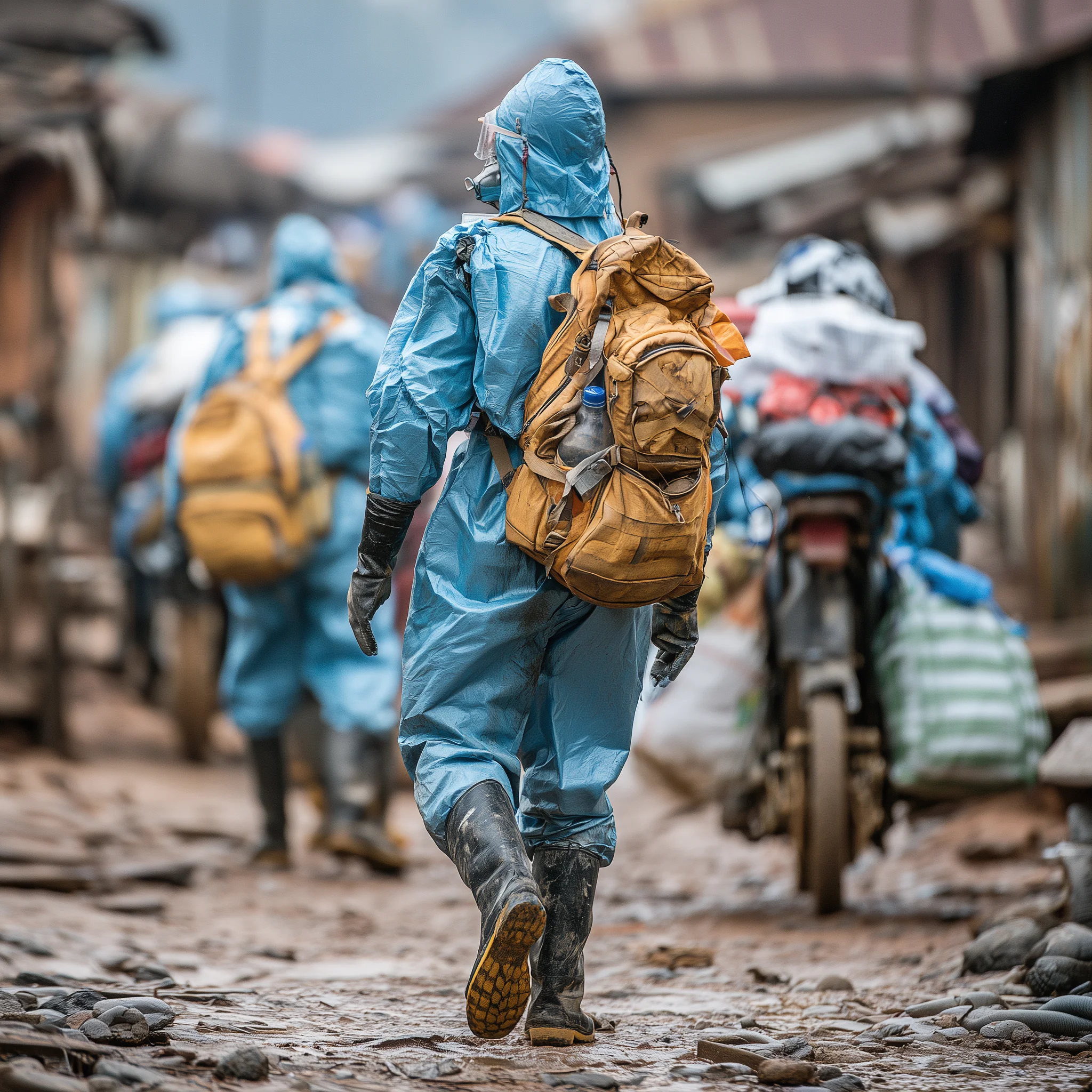
DRC Ebola Outbreak 2026: What Travelers Need to Know
An Ebola outbreak unlike any the world has seen in years is unfolding in the Democratic Republic of the Congo — and for travelers heading to or transiting through Central or East Africa, it matters right now.
The outbreak is caused by the Bundibugyo strain of Ebola, which is different from the Zaire strain that most people associate with the major 2014–2016 West Africa epidemic. That distinction is not just academic. It means the two licensed Ebola vaccines currently available to the world do not work against this outbreak. There is no approved vaccine or targeted treatment for Bundibugyo virus disease.
Here is what is happening, what it means for travelers, and what you should do if your plans involve the region.
What is the Bundibugyo Ebola outbreak?
Bundibugyo virus was first identified in Uganda in 2007. For nearly two decades, it remained a pathogen without a licensed countermeasure. In early 2026, it resurfaced in the Democratic Republic of the Congo’s northeastern provinces and quickly grew into the largest Bundibugyo outbreak ever recorded.
As of July 18, 2026, the DRC had confirmed 2,344 laboratory cases and 930 deaths across five provinces: Ituri, North Kivu, South Kivu, Haut-Uele, and Tshopo. Ituri Province alone accounts for more than 2,000 of those cases, with 27 of its 36 health zones affected.
The World Health Organization declared this outbreak a Public Health Emergency of International Concern (PHEIC) on May 17, 2026 — only the eighth PHEIC in the history of modern international health regulations. WHO has described this as the fastest-growing Bundibugyo outbreak on record.
The scale matters because without a vaccine, response teams cannot use ring vaccination — the strategy that helped bring previous Ebola outbreaks under control. Containment relies entirely on isolation, contact tracing, and supportive care in an area already complicated by armed conflict, population displacement, and limited laboratory infrastructure.
Has this reached other countries?
Yes. The outbreak has spread beyond DRC borders in limited but confirmed cases.
Uganda reported 20 confirmed cases as of July 20, 2026 — 15 linked to travel from DRC and 5 classified as local transmission. All cases were in Kampala and Wakiso. Uganda’s last reported case was confirmed on June 21 and was travel-related.
France confirmed one imported case on June 24, 2026, in a traveler returning from DRC.
A U.S. citizen working with a humanitarian organization in DRC tested positive for Bundibugyo virus in early July and was medically evacuated to Germany for treatment. No cases have been confirmed on U.S. soil as a result of this outbreak.
What are the current travel advisories?
CDC has issued a Level 3 Travel Health Notice — “Reconsider Nonessential Travel” — for the affected provinces of DRC: Haut-Uele, Ituri, North Kivu, and Tshopo. This is the second-highest alert level CDC issues.
The U.S. State Department’s worldwide caution, updated July 22, 2026, flags the DRC situation as an active public health concern for Americans abroad.
The UK Foreign, Commonwealth & Development Office and Global Affairs Canada have similarly advised travelers to avoid non-essential travel to the affected provinces of DRC. Check your home country’s advisory before any travel to the region.
US entry restrictions: what travelers need to know
Since May 18, 2026, the CDC and Department of Homeland Security have implemented entry restrictions and enhanced screening for travelers arriving in the United States from affected countries. On July 13, CDC issued its third consecutive 30-day renewal of these measures, keeping them active through approximately August 12, 2026.
Key points:
- All travelers who have been in DRC within 21 days of arriving in the United States must enter through one of the designated airports for enhanced screening and may face entry restrictions.
- Certain travelers from Uganda and South Sudan are also subject to enhanced screening if they have been in those countries within 21 days of arrival.
- The designated airport list is published on the CDC’s Ebola Situation Summary page and is updated regularly.
- Federal biocontainment units at academic medical centers are designated to evaluate any traveler who shows potential symptoms, at no cost for initial evaluation.
If you have recently been to DRC, Uganda, or South Sudan and are planning to enter the U.S., check the CDC’s current designated airports before you book your routing.
How does Ebola spread and what is the actual risk to travelers?
Ebola is not airborne. It does not spread through casual contact or being in the same airport as an infected person. Transmission requires direct contact with the blood, body fluids, or secretions of someone who is sick or who has died from the disease.
For most international travelers - business travelers, tourists, aid workers - the practical risk is extremely low if standard precautions are followed. The elevated risk applies to:
- Healthcare workers treating confirmed cases without proper protective equipment
- People who have direct contact with the sick or deceased in affected communities
- Laboratory workers handling specimens from confirmed cases
If you are not traveling to the affected provinces of DRC or engaging in care for sick individuals, your personal risk from this outbreak is very low. That said, being aware of the situation is important for planning purposes.
What should travelers do?
Before you travel:
- Check your country’s official travel advisory for DRC, Uganda, and South Sudan.
- Verify your travel insurance includes evacuation coverage and check whether outbreaks or epidemics affect your claims.
- If traveling for humanitarian or healthcare work, consult a travel medicine clinic. The CDC Travelers’ Health website has pre-travel guidance specifically for DRC-bound humanitarian workers.
- Register with your country’s embassy in-country assistance program before departure.
During travel:
- Avoid contact with anyone showing signs of severe illness - fever, unexplained bleeding, vomiting.
- Avoid handling the bodies of people who have died, particularly in affected provinces.
- Wash hands frequently and avoid touching your face in high-contact public settings.
- Keep Sitata active on your device. You will receive real-time alerts if the situation changes in areas relevant to your trip.
Returning travelers from affected regions:
- Monitor yourself for 21 days after leaving DRC, Uganda, or South Sudan.
- Symptoms of Bundibugyo virus include sudden fever, severe headache, muscle pain, fatigue, vomiting, diarrhea, and in severe cases, unexplained bleeding.
- If you develop any of these symptoms within 21 days of returning, do not go to a regular hospital or clinic. Call your national health authority’s emergency line first so they can direct you to appropriate care and prevent potential exposure to healthcare workers.
What about the rest of Africa?
The WHO and national health authorities monitor this situation closely for spread to neighboring countries — Rwanda, Burundi, Tanzania, South Sudan, and the Central African Republic all share borders with affected DRC provinces.
For travelers with plans to East or Central Africa more broadly, the risk remains low but the situation is evolving. Situational awareness is the best thing you can do right now.
Why this outbreak is different
Most Ebola outbreaks that make international headlines involve the Zaire strain - the same strain that caused the 2014–2016 West Africa epidemic and the repeated DRC outbreaks that followed. Zaire outbreaks, while devastating, have a containment tool: a vaccine.
This outbreak does not. The two licensed vaccines (Ervebo and the Mvabea/Zabdeno regimen) were designed for Zaire and have not been validated for Bundibugyo. WHO has explicitly recommended against their use in this outbreak due to insufficient cross-protection evidence.
That means global health authorities are managing the largest Bundibugyo outbreak in history using methods from a pre-vaccine era: isolation, contact tracing, quarantine, and supportive care. It is working to slow but not stop the spread.
The situation will continue to evolve. Sitata monitors outbreaks like this in real time, and travelers with active plans in affected regions will receive direct alerts through the app as the situation changes.
Sources: CDC Ebola Situation Summary, CDC Travel Health Notice (Level 3), WHO PHEIC Declaration, NICD South Africa, ECDC, U.S. State Department Worldwide Caution (July 22, 2026).